DONATE

Showing posts with label Tony Cooke. Show all posts

Sunday, September 21, 2025

Intro to ‘In Christ’ Insights…

Intro by John R. Houk, Blog Editor

Intro © September 21, 2025


The Rev. Tony Cooke was one of my favorite Instructors in my Bible School days at RHEMA Bible Training Center between 1982-84 (now RHEMA Bible Training College). These days my Bible School Alma Mater is an accredited college. That was not the case in the early 1980s, hence I attended then graduated from Central Washington University in 1981 with a BA in History and a Minor in Religious Studies (5 credits short of a Political Science Minor). My CWU experience in the History Department was essentially a Left-Right divide among the tenured Professors. Sadly, my CWU Alma Mater has gone full WOKE/DEI. I would not ever attend there today.

Tony & Lisa Cooke (screengrab from TCM About Page)


Rev. Cooke has long since branched out on his own Ministry since RHEMA days. AND I’m on his email list. As such I want to share a Christian history I received circa 9/15/25 (I’m not sure of the exact date because I deleted the email). The Tony Cooke Ministry post does not have a date which is why I mention the timeframe.


If you are a Bible Believing Christian, you will appreciate the post. If you need Redemption in Christ, hopefully this history piece will inspire you. In which case here is the yet effective Roman Road to Salvation:


9 that if you confess with your mouth the Lord Jesus and believe in your heart that God has raised Him from the dead, you will be saved. 10 For with the heart one believes unto righteousness, and with the mouth confession is made unto salvation. 11 For the Scripture says, “Whoever believes on Him will not be put to shame.” 12 For there is no distinction between Jew and Greek, for the same Lord over all is rich to all who call upon Him. 13 For “whoever calls on the name of the Lord shall be saved.” (Blog Editor Bold Text Emphasis - Romans 10: 9-13 NKJV)


AND NOW, ‘“In Christ” Insights from the 1800s’.


JRH 9/21/25

Always Free to Read yet READER SUPPORTED!

PLEASE! I need more Patriots to step up. I need Readers to chip in $5 - $10 - $25 - $50 - $100 (PAYPAL or CARD - one-time or recurring). YOUR generosity is APPRECIATED. PLEASE GIVE to Help me be a voice for Liberty:

Please Support SlantRight 2.0

Big Tech Censorship is pervasive – Share voluminously on all social media platforms!

Our Senior Citizen Family Supplements our income by offering healthy coffee products. BETTER YOUR HEALTH with healthy & good tasting COFFEE and enjoy some weight management supplements. BUY Happy Coffee & Weight Loss Supplements at the Diana Wellness Store: https://dianawellnessstore.com


>>HAPPY HEALTHY COFFEE<<

**********************************

“In Christ” Insights from the 1800s


By Tony Cooke

Tony Cooke Ministries


I wrote an article two years ago in which I shared insights from two pastors — A.J. Gordon and A.T. Pierson — both of these men wrote in the 1800s. Each had tremendous insights regarding Jesus’ substitutionary death, identification, and the believer’s identity “in Christ.” This new article picks up where the other article left off, providing additional teaching from these two ministers. Enjoy!


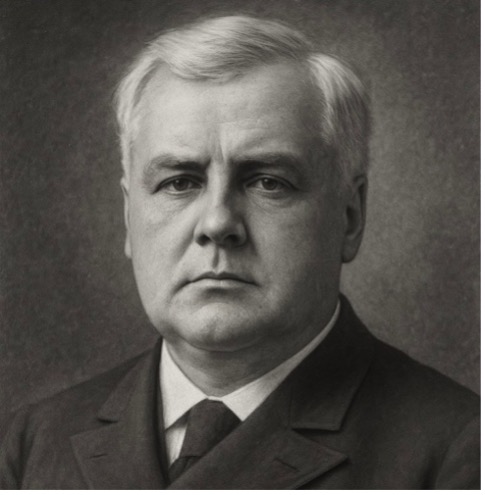
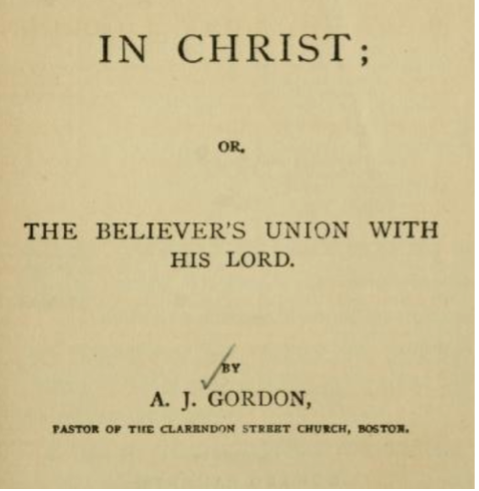
A.J. Gordon (1836-1895), author of In Christ: The Believer’s Union with his Lord, (1872).

A.J. Gordon - In Christ: The Believer’s Union with his Lord (TCM Photos)


“The union of the believer with his Lord is a reciprocal union. “You in me, and I in you.” Through it Christ both gives and takes — gives the Father’s life and blessedness, and takes the believer’s death and wretchedness.”


“Christ, in raising man into union with Himself, raises him into all that belongs to Him, into his divine life, and into partnership with his divine work. So that he dies in his death; rises in his resurrection; ascends in his ascension; is seated with Him in his session at the Father’s right hand; and lives in his eternal life.”


“If one is in Christ, he must have regeneration; for how can the Head be alive, and the members dead? If one is in Christ, he must be justified; for how can God approve the Head, and condemn the members? If one is in Christ, he must have sanctification; for how can the spotlessly Holy remain in vital connection with one that is unholy? If one is in Christ, he must have redemption; for how can the Son of God be in glory, while that which He has made a part of his body lies abandoned in the grave of eternal death?”


“’But now is Christ risen from the dead.’ And since we are risen with Him, we are not in our sins. In his renewal from the dead, we were lifted forever from their dark enfolding condemnation. They cannot bind a single fetter on us now; they cannot remand us for a single instant to the prison-house of despair.”


“But not only does our resurrection in Christ raise us out of condemnation; it also lifts us into a new life in Him. In Christ crucified we put off the old man, in Christ risen we put on the new man. The cross was for the destruction of the body of sin; the resurrection was for imparting to us the principle of divine life.”


“The Resurrection of our Lord then is not merely a pledge of our own; it is our own if we are his. All that it did for Him, we may boldly say it did for us if we are in Him.”


“A negative process is not adequate to accomplish a positive result. And no amount or kind of self-denial can make one holier, unless this be the means of bringing him into more intimate fellowship with Christ. Every retreat from the life of the flesh must be followed by a deeper entering into the life of the Spirit. Self-denial is, according to its degree, a parting company with Adam that we may not walk after the flesh; but prayer and faith and love and obedience must accompany, as the means of joining ourselves more entirely to Christ, and of abiding in Him, that we may so walk even as He walked.”


“Communion with Jesus is a certain means to the excommunication of sin. Growth in grace can never fail to promote the subjection of nature. If we have striven in vain to root out the tares which the enemy has sown in the heart, we may yet rejoice to know that they cannot endure the burning heat of Christ’s unclouded presence.”


“We sighed for the love of God before, but could find no sense or assurance of it, because we could find nothing in us or upon us which it could approve. But now we see how as risen with Christ we have been borne up into the favor of the Father and into the full fruition of the prayer, ‘that the love wherewith Thou hast loved me may be m them and I in them!’”


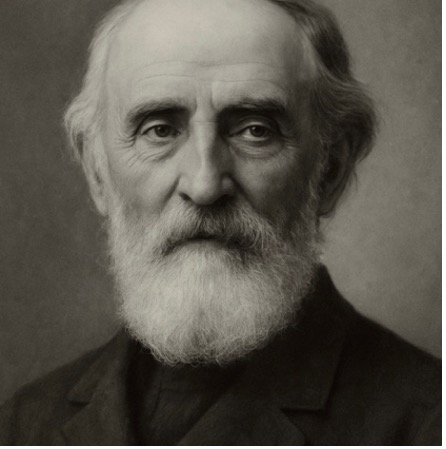
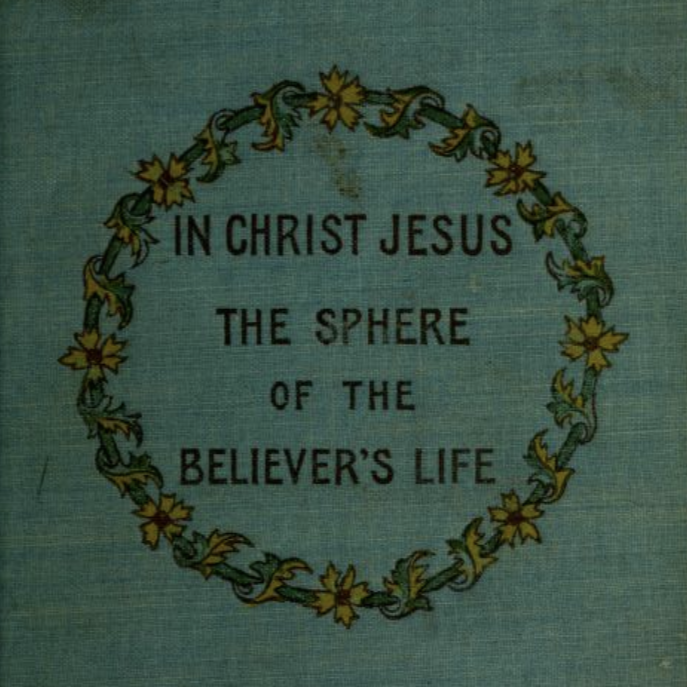
A.T. Pierson (1837-1911), author of In Christ Jesus: The Sphere of the Believers Life, (1898).

A.T. Pierson - In Christ Jesus: The Sphere of the Believers Life (TCM Photos)


“Those three short words, ‘in Christ Jesus’ are, without doubt, the most important ever written, even by an inspired pen, to express the mutual relation of the believer and Christ. They occur, with their equivalents, over one hundred and thirty times. Sometimes we meet the expression, in Christ, or in Christ Jesus, and again in Him, or in Whom, etc. And sometimes this sacred name, or its equivalent pronoun, is found associated with other prepositions — through, with, by; but the thought is essentially the same.”


“Oh, the unclaimed riches of the believer in Christ Jesus!”


“He who is risen with Christ, and has the Breath of God in him, should live as a risen, quickened, breathing son of God, and walk in the Spirit in newness of life.”


“We might compare the two epistles thus:
Romans : Justified in Christ Jesus by His blood.


Corinthians: Sanctified in Christ Jesus by His Spirit.


And, through both of the Epistles to the Corinthians, the golden thread of connection is our union with Christ by the indwelling and inworking of His Holy Spirit.”


He, the mighty and the holy One, He was wounded, bruised, chastised! He was treated thus, not because He deserved it, but for our sakes, because we deserved it. His punishment is our peace. His stripes are our healing. His death our life. O greatest of all facts! Well mayest Thou have the central place in prophecy, the central place in our hearts! This is the Gospel. To believe this is to be saved; He has borne the stripes and punishment due to each believer, who will, therefore, have none to bear. To believe this is to be happy, for it is to see a substitute in our place of doom and death, setting us free! To believe this is to be holy, for faith in such facts must make us love the One that suffered in our stead, and hate the sin that brought sore stripes on Him.”


“This letter to the Ephesians lifts us to the very summit, the third heaven of privilege, and is especially rich in that phrase which we are now devoutly tracing throughout the New Testament. We find here at least ten separate uses or combinations of the words in Christ or in Him, as applied to the present estate of the believer, and as exhibiting His possible heavenly life even while on earth; and there is one besides which refers to coming blessing. In this epistle we are declared to be, IN CHRIST, chosen, predestinated to the adoption of children, accepted; to have redemption and forgiveness, to be quickened or made alive, raised, seated in the heavenlies; to have been sealed and to have obtained an inheritance : these are the ten present blessings, and the one, yet future, is that in Him we are to be gathered together in one, with all saints, at His coming.”


“And remember the sublime saying of the sainted George Mueller. When his helpers were asked how they could account for the fact that his serene calm was undisturbed when, with two thousand orphans to clothe and feed, there was neither food in the larder nor money in the bank, and his one resort was prayer — the answer was, that it could be accounted for only on his own philosophy: ‘Where anxiety begins, faith ends; And where faith begins, anxiety ends.’”


“Christ came to do God’s will, and took in His incarnation a body prepared for Him, and in a higher sense, another body — the Church — after His resurrection. This body is thus seated with Him in the heavenlies, and all enemies are to become the footstool of Christ and His mystical body, bruised under His feet. We have a right in Him to this exalted seat in the heavenlies, and to sit down with Him in peace, as those who have the sense of a finished work and completed conquest, henceforth in Him expecting — anticipating, that all foes will be made our footstool. So far as we can take this in by faith, they are already subdued.”


SUPPORT TONY COOKE MINISTRIES


Text Copyright © 2001 - 2025, Tony Cooke

Wednesday, September 21, 2022

My Intro to Cooke’s ‘Why Did King Charles III Do That?’


John R. Houk, Blog Editor

© September 21, 2022


Tony Cooke was one of Instructors in the days I attended what was then RHEMA Bible Training Center (Now RHEMA Bible Training College) in the two-year program 1982-84. And so yup, I signed up to be on his email list from the Tony Cooke Ministries website.


On September 16 I received an email that caught my attention under the subject, “Why Did King Charles III Do That?”


The UK lost their longest reigning monarch Queen Elizabeth II and her oldest son Charles assumed the throne as King Charles III. The reason the subject title caught my attention is I am fully aware King Chuck is fully behind the elitist agenda of the Globalist World Economic Forum (WEF) which offers ZERO that is pleasant toward American Liberty (I hope Americans see the Declaration of Independence irony here) and Individual Freedom.


Alas … Brother Cooke addressed none of my Prince Chuck concerns. BUT pieced together an interesting piece of Church history that addresses Religious Liberty using the newly minted King Charles III signing an oath “to uphold the security of the Church in Scotland.” I have to wonder how much King Chuck will honor that oath considering his WEF Globalist pedigree.


So, let’s join Tony Cooke on this historical snapshot of Church history in regard to UK history from the email.


JRH 9/21/22

Thank you to those who have stepped up!

READER SUPPORTED! I need Readers willing to chip in $5 - $10 - $25 - $50 - $100. PLEASE I need your generosity. PLEASE GIVE to Help me be a voice for Liberty:

Please Support SlantRight 2.0

Big Tech Censorship is pervasive – Share voluminously on all social media platforms!

******************************

Why Did King Charles III Do That?


King of Hearts (Suicide King – another irony?) & Title


By Tony Cooke

Sent via TCM

Sent 9/16/22 7:59 AM


Shortly after the death of Queen Elizabeth II, the announcement was made that her son, Prince Charles, would succeed her and would be known as King Charles III. Two days after her passing, at the ceremony where Charles III was formally proclaimed the new King of England, he signed an oath to uphold the security of the Church in Scotland. This was all part of the established protocol for an incoming monarch.
 
The history of Christianity in England is loaded with intricacies and complexities, and much of it doesn’t seem to have anything to do with what Jesus taught and promoted. In certain eras, political maneuvering abounded and the ruling party in religious conflicts would sometimes banish, behead, or burn opponents at the stake. Threats and intimidation were commonplace. “Live and let live” was certainly not the prevailing attitude of those who held religious and political power.
 
Before we examine why King Charles III signed a document respecting the sovereignty of the Church of Scotland, let’s look at Charles I (1600-1649) and Charles II (1630-1685). King Charles I followed the reign of King James I (who authorized the production of the Authorized Version of the Bible, also known as the King James Bible). King Charles I opposed and took action against any group that resisted the State Church, especially the Scots. While there were many factors involved in his political demise, he was eventually tried for treason and executed.
 
Later, Charles II ascended to the throne of England. As a playboy, he would be known and remembered as the “Merry Monarch.” Believers, including those in Scotland and Ireland, who did not want their churches under government control were targeted by the King and by Parliament. Puritans (those who wanted to “purify” the church of England) suffered during this time as the Church of Scotland, which wanted to operate independently based on a Presbyterian form of church government.
 
Britannica states that “The Conventicle Act of 1664 punished any person over 16 years of age for attending a religious meeting not conducted according to The Book of Common Prayer. The Five Mile Act of 1665 prohibited any ejected minister from living within five miles of a corporate town or any place where he had formerly served.”[1] In other words, if you don’t operate your church under the State Church and its directives, you were going to suffer.
 
We want to take a quick look at two Scottish ministers who stood up against governmental and ecclesiastical tyranny, John Knox (1514-1572) and Samuel Rutherford (1600-1661).
 
In 1547, John Knox and other Protestants were taken prisoner and he served as a galley slave (chained and rowing) for nineteen months. Later he spent time exiled in Geneva, but he eventually returned to Scotland to work toward a church free from government control. It is said that Mary Queen of Scots remarked, “I fear the prayers of John Knox more than all the assembled armies of Europe.”
 
As he approached death, Knox prayed, “Come, Lord Jesus. Sweet Jesus into Thy hand I commend my spirit. Be merciful, Lord, to Thy Church, which Thou hast redeemed. Give peace to this afflicted commonwealth. Raise up faithful pastors who will take charge of Thy Church.” The epitaph on his grave read, “Here lies a man who in his life never feared the face of man.”
 
Samuel Rutherford, a Scottish Presbyterian pastor, lived in a century that saw many suffer martyrdom for their faith. At one point, Rutherford himself was banished from the city where he pastored and was forbidden to preach. Through the influence of Rutherford and others, a National Covenant was signed in 1638 (during the time of Charles I’s reign). This document expressed their resistance to the imposition of State Church regulations on their worship based on the fact that Jesus Christ is the true head of the Church. It is said that some Scots signed this covenant in their own blood.
 
Later, Rutherford authored a book entitled Lex Rex (The Law of the King). In this work, he stressed God’s absolute authority and argued for limited governmental authority. Under the reign of King Charles II, this book was banned and burned. When Rutherford was charged with treason and demanded to appear before the authorities, he was already on his deathbed and responded with this statement: "I have a summons already from a superior judge, and it is better that I answer my first summons. I now go to be where few kings and great people come."
 
Summary
Today in America, we think nothing of different denominational and independent churches existing and working peacefully side by side. This has not been the case through much of western history. Our freedoms are due in large part to the battles for religious freedom in Europe, even to the point that the initial statement in our Constitution’s First Amendment is: “Congress shall make no law respecting an establishment of religion, or prohibiting the free exercise thereof…”
 
Also, we can better understand why one of the first actions taken by the new King of England, Charles III, was to sign a document guaranteeing respect for the independence of the Church of Scotland. It is all rooted in history.
 
Great Statements by John Knox (1514 – 1572)


John Knox (1514 – 1572)


“The Scriptures of God are my only foundation and substance in all matters of weight and importance.”


“Live in Christ, die in Christ, and the flesh need not fear death.”
 
“A man with God is always in the majority.”
 
“Lord, give me Scotland or I die!”
 
“When I think of those who have influenced my life the most, I think not of the great but of the good.”
 
“O Lord Eternal, move and govern my tongue to speak the truth.”
 
“None have I corrupted, none have I defrauded; merchandise have I not made.”

Great Statements by Samuel Rutherford (1600 – 1661) 


Samuel Rutherford (1600 – 1661)


“Believe God's love and power more than you believe your own feelings and experiences. Your rock is Christ, and it is not the rock that ebbs and flows but the sea.”
 
“They lose nothing who gain Christ.”

"My faith has no bed to sleep upon but omnipotence.”

“Jesus Christ came into my prison cell last night, and every stone flashed like a ruby.”

“Make not Christ a liar in distrusting His promise.”

“Grace tried is better than grace, and more than grace; it is glory in its infancy.”

“I seldom made an errand to God for another, but I got something for myself.”


Footnote


[1] https://www.britannica.com/topic/Protestantism/The-Restoration-1660-85


Bible teacher and author Tony Cooke graduated from RHEMA Bible Training Center in 1980 and received degrees from North Central University (Bachelor’s in Church Ministries) and Liberty University (Master’s in Theological Studies/Church History). His ministerial background includes pastoral ministry, teaching in Bible schools, and directing a ministerial association. Tony’s passion for teaching the Bible has taken him to more than thirty nations and nearly all fifty states. He is the author of a dozen books, of which, various titles have been translated and published in eight other languages. Tony and his wife, Lisa, reside in Broken Arrow, Oklahoma, and are the parents of two adult children


SUPPORT Tony Cooke Ministries


Copyright © 2022 Tony Cooke Ministries, All rights reserved.


Tony Cooke Ministries

PO Box 140187

Broken Arrow, OK 74012


Sunday, April 16, 2017

Medical Description of the Flogging and Crucifixion of Jesus


My lovely wife sent this Easter message to from Rev. Tony Cooke. Rev. Cooke was one of my instructors when I attended RHEMA Bible Training Center (now RHEMA Bible Training College) between 1982 – 84.

Rev. Tony Cooke

JRH 4/16/17
**************
Medical Description of the Flogging and Crucifixion of Jesus

Origin Tony Cooke
Email Sent 4/15/2017 10:03 AM
Excerpted From: The Expositors Bible Commentary

(Commenting on Mark 15:15) The Romans first stripped the victim and tied his hands to a post above his head. The whip (flagellum) was made of several pieces of leather with pieces of bone and lead embedded near the ends. Two men, one on each side of the victim, usually did the flogging. The Jews mercifully limited flogging to a maximum of forty stripes; the Romans had no such limitation. The following is a medical doctor’s description of the physical effects of flogging.

The heavy whip is brought down with full force again and again across Jesus’ shoulders, back, and legs. At first the heavy thongs cut through the skin only. Then, as the blows continue, they cut deeper in the subcutaneous tissues, producing first and oozing of blood from the capillaries and veins of the skin, and finally spurting arterial bleeding from vessels in the underlying muscles… Finally the skin of the back is hanging in long ribbons and the entire area is an unrecognizable mass of torn, bleeding tissue. (C. Truman Davis, “The Crucifixion of Jesus.  The Passion of Christ from a Medical Point of View,” Arizona Medicine 22, no. 3 [March 1965]: 185)

It is not surprising that victims of Roman floggings seldom survived.

(Commenting on Mark 15:17-18) The crown was made of some kind of prickly plant such as abounds in Palestine. This they pressed into his scalp. Again there must have been copious bleeding because the scalp is one of the most vascular areas of the body.

(Commenting on Mark 15:19) The mocking was followed by further physical violence. The blows hitting his head from the staff drove the thorns more deeply into Jesus’ scalp and caused even more profuse bleeding. They also kept spitting on him…

(Commenting on Mark 15:20) At last tiring of their sadism, the soldiers tore the robe from Jesus’ back. The fabric had probably stuck to the clots of blood and serum in the wounds.  Thus when it was callously ripped off him, it caused excruciating pain, just as when a bandage is carelessly removed. Jesus’ own clothes were now put back on him.

(Commenting on Mark 15:21) Men condemned to die by crucifixion were customarily required to carry the heavy wooden crosspiece (patibulum) on which they were to be nailed, to the place of execution. Jesus started out carrying his cross (John 19:17), but it proved to be too much for him.  The patibulum usually weighed thirty or forty pounds and was usually strapped across the shoulders. One can hardly imagine the pain caused by the rough heavy beam pressing into the lacerated skin and muscles of Jesus’ shoulders. The scourging of blood so weakened him that he could not go on carrying the heavy crossbeam.
 
(Commenting on Mark 15:24) Mark simply says, “And they crucified him.” What incredible restraint! Especially when one considers that crucifixion was, as Cicero said, “the cruelest and most hideous punishment possible” (In Verrem 5.54.165).  What took place physically is described by Davis (“Crucifixion of Jesus,” pp. 186-187).

Simon is ordered to place the patibulum on the ground and Jesus is quickly thrown backwards with his shoulders against the wood. The legionnaire feels for the depression at the front of the wrist. He drives a heavy, square, wrought-iron nail through the wrist and deep into the wood. Quickly he moves to the other side and repeats the action, being careful not to pull the arms too tightly, but to allow some flexion and movement. The cross is then lifted into place.

The left foot is pressed backward against the right foot, and with both feet extended, toes down, a nail is driven through the arch of each, leaving the knees moderately flexed. The victim is now crucified. As he slowly sags down with more weight on the nails in the wrists, excruciating, fiery pain shoots along the fingers and up the arms to explode in the brain—the nails in the wrists are putting pressure on the median nerves. As he pushes himself upward to avoid this stretching torment, he places the full weight on the nail through his feet. Again he feels the searing agony of the nail tearing through the nerves between the metatarsal bones of the feet.

At this point, another phenomenon occurs. As the arms fatigue, cramps sweep through the muscles, knotting them in deep, relentless, throbbing pain. With these cramps comes the inability to push himself upward to breathe. . . . Air can be drawn into the lungs but not exhaled. Jesus fights to raise himself in order to get even one small breath. Finally carbon dioxide builds up in the lungs and in the blood stream, and the cramps partially subside. Spasmodically he is able to push himself upward to exhale and bring in life-giving oxygen.

Hours of this limitless pain, cycles of twisting, joint-rending cramps, intermittent partial asphyxiation, searing pain as tissue is torn from his lacerated back as he moves up and down against the rough timber. Then another agony begins a deep, crushing pain deep in the chest as the pericardium slowly fills with serum and begins to compress the heart.

It is now almost over—the loss of tissue fluids reached a critical level—the compressed heart is struggling to pump heavy, thick, sluggish blood into the tissues—the tortured lungs are making a frantic effort to gasp in small gulps of air. . . . The body of Jesus is now in extremis, and He can feel the chill of death creeping through his tissues . . . . His mission of atonement has been completed.  Finally he can allow His body to die.

All this, the Bible records with the simple words, "And they crucified him" (Mark 15:24).

The article is excerpted from The Expositors Bible Commentary (Volume 8, pages 775-780, Zondervan Publishing House, Grand Rapids, Michigan, 1984.)

+++
Blog Editor: Visualize the blood, pain and suffering must have felt by volunteering to freely give up his life that all who believe might have life. What it we believe?

Christ was Crucified and died the same day. Counting Crucifixion day, the third day arose bodily from the tomb after defeating Satan and taking hold of the keys of death and life. Christ’s new life is our life if only we believe:

7 But to each one of us grace was given according to the measure of Christ’s gift. 8 Therefore He says:

“When He ascended on high,
He led captivity captive,
And gave gifts to men.”[a]

9 (Now this, “He ascended”—what does it mean but that He also first[b] descended into the lower parts of the earth? (Ephesians 4: 7-9 NKJV)

==

19 For I through the law died to the law that I might live to God. 20 I have been crucified with Christ; it is no longer I who live, but Christ lives in me; and the life which I now live in the flesh I live by faith in the Son of God, who loved me and gave Himself for me. (Galatians 2: 19-20 NKJV)

Jesus is Risen indeed!

______________

Bible Teacher and Author, Tony Cooke has been married to his wife, Lisa, since 1979. Together, they have been serving the Body of Christ since 1980.

Since 2002, Tony and Lisa have traveled full-time with an assignment of “Strengthening Churches and Leaders.” Tony’s passion for teaching the Bible has taken him to forty-six states and twenty-six nations.

In 2014, the website of Tony Cooke Ministries reached 230,967 unique individuals, many of them pastors, missionaries, and other church leaders in 219 nations and territories with encouraging and helpful ministerial resources.


Prior to traveling, Tony was involved in pastoral ministry for more than twenty years, and served as an Instructor and the Dean of Rhema Bible Training Center. He also served for thirteen years as the Director of an International Ministerial Association.

In addition to being a 1981 graduate of RHEMA Bible Training Center, Tony studied Religion at Butler University and received a degree in Church Ministries from North Central University.

Tony, and Lisa reside in Broken Arrow, Oklahoma and are the parents of two adult children, Laura and Andrew.