
Intro by John R. Houk, Blog Editor
Intro © October 26, 2025

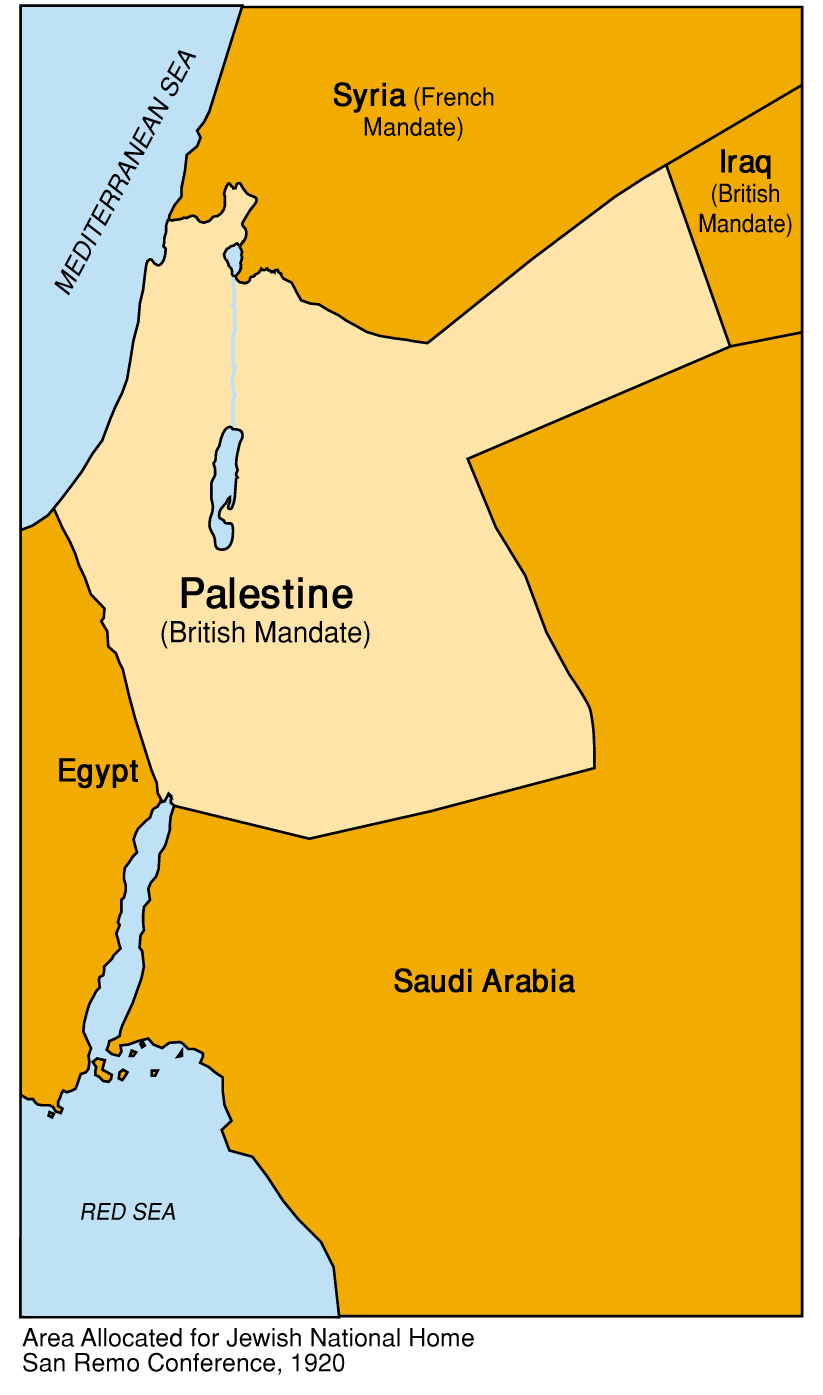
British Mandate for Palestine Map 1920 (Jewish Virtual Library Photo from “British Palestine Mandate: History & Overview (1922 - 1948)”
Here’s an interesting post from Israpundit by Jalal Tagreeb (an ex-Muslim) & Peloni (an Israeli Jew). They took a look at history circa British Mandate for Palestine made by the now defunct League of Nations shortly after WWI. The British Mandate for Palestine was originally envisioned to create a national Homeland for Jews. Hmm…Guess who the original Palestinians were under the British Mandate? The Israpundit title, “Jordan: The Forgotten Palestinian State”.
Take a look at some inconvenient historical facts that Antisemites and Jew-Hating Muslims will not want you to know.
JRH 10/26/25
Always Free to Read yet READER SUPPORTED!
PLEASE! I need more Patriots to step up. I need Readers to chip in $5 - $10 - $25 - $50 - $100 (PAYPAL or CARD - one-time or recurring). YOUR generosity is APPRECIATED. PLEASE GIVE to Help me be a voice for Liberty:
Big Tech Censorship is pervasive – Share voluminously on all social media platforms!
Our Senior Citizen Family Supplements our income by offering healthy coffee products. BETTER YOUR HEALTH with healthy & good tasting COFFEE and enjoy some weight management supplements. BUY Happy Coffee & Weight Loss Supplements at the Diana Wellness Store: https://dianawellnessstore.com
>>SHOP TAB<<
***************************
Jordan: The Forgotten Palestinian State
By Jalal Tagreeb & Peloni
Oct 25, 2025

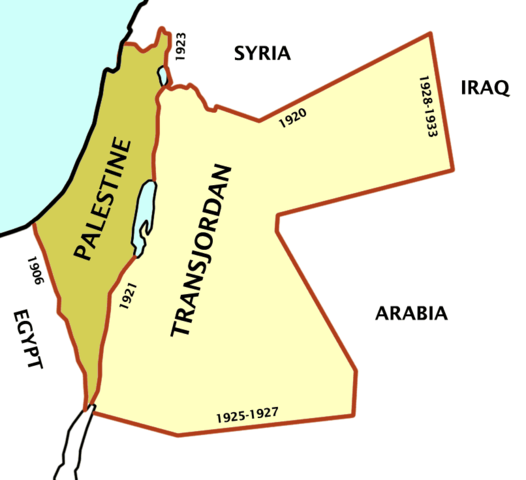
Palestine - Transjordan Map (Israpundit Photo)
The region covered by the League of Nations Mandate for Palestine. By Zero0000 – Own work, CC0, Wikipedia
The Israeli-Palestinian conflict has been framed as requiring a “two-state solution” for decades, yet this framework ignores a fundamental reality: a Palestinian state already exists in the form of the Hashemite Kingdom of Jordan.
This article examines the historical, legal, and demographic evidence demonstrating that Jordan, comprising 78% of the original territory under the League of Nations Mandate for Palestine with a Palestinian majority population, represents the actualization of Palestinian statehood. Recognition of this reality offers a path forward that respects international law, demographic facts, and the legitimate national aspirations of both peoples.
Introduction
In his meticulously researched article “The Promised Land of Jordan,” anthropologist Geoffrey Clarfield presents evidence that challenges the foundational assumptions of contemporary Middle East peace processes. His central thesis is both simple and revolutionary: “The Arabs of Palestine, that is the Palestinians, are a majority in Eastern Palestine, that is to say the state of Jordan. If one accepts this historical and legal fact, then first thinking and then policies must change in both Israel and the Anglosphere. Without realizing it, the world has been living with a two-state solution for decades” (Clarfield, 2023, p. 22).
This proposition is not mere rhetoric but is grounded in historical documentation, international law, and demographic reality. Moreover, it comes supported by voices from within the Palestinian-Jordanian community itself, most notably Mudar Zahran, a Palestinian-Jordanian opposition leader who has risked his life to speak this truth. Understanding why this reality has been obscured requires examining the history of how Jordan came to exist and how its true character has been systematically denied for strategic purposes.
Mandate Betrayed
The story begins with the League of Nations Mandate for Palestine, established in 1920 following the defeat of the Ottoman Empire. This mandate granted Britain administrative authority over a territory that included lands both east and west of the Jordan River, with the explicit purpose of creating a Jewish national home. As Clarfield (2023) notes, “Part of the territory mandated as ‘British’ Palestine by the League of Nations, then, was to be given to the Jewish people. Its territory initially included all of the Bible lands west of the Jordan river, including Judea and Samaria and much land east of the Jordan to the borders of Iraq and Saudi Arabia” (p. 19).
However, in 1923, Britain unilaterally violated this mandate. Clarfield’s assessment is unequivocal: “In 1923 the League of Nations Mandate for Palestine was arbitrarily, immorally, and illegally violated by the British, who had been authorized by the League as its implementers… They did so by creating what they called the temporary ‘Emirate of Jordan’ in Eastern Palestine. Jews were no longer allowed to live there” (p. 19).
This violation fundamentally altered the character of the mandate and created an artificial distinction between populations that were legally and historically part of the same territory. Crucially, the legal validity of the original mandate remains binding under international law. As Clarfield (2023) explains, referencing the work of Canadian international lawyer Jacques Gautier, “according to international law, the Mandate remains valid… all of the legal pronouncements of the League were subsequently recognized as binding when the United Nations was created after the Second World War” (p. 19).
The Ethnographic Fiction of Jordan
Perhaps the most striking revelation in Clarfield’s analysis concerns the very concept of “Jordanian” identity. He demonstrates that this identity is entirely artificial, a 20th-century colonial construct without historical precedent: “Until the second decade of the 20th century there has never been a Jordanian people, ethnic group, tribe or nation by that name, or a group of diasporic exiles who thought of themselves as ‘Jordanian.’ The Hashemite Kingdom of Jordan and the ‘Jordanian People’ are a 20th century British invention, dreamed up in the 1920s” (Clarfield, 2023, p. 19).
The Hashemite ruling family itself was imported from the Hejaz region of Arabia after being defeated by the Saudis in the early 1920s. Britain installed them as rulers and gave them the trappings of legitimacy by mistranslating their tribal title “Emir” as “King,” creating what Clarfield calls “a kind of faux royal aura” (p. 20). This Bedouin tribal elite, comprising approximately 10% of Jordan’s population, has maintained control over a Palestinian majority through what some have characterized as an apartheid system.
Clarfield’s description of this arrangement is damning: “The Hashemites were and continue to be a usurping Bedouin tribal elite in Eastern Palestine. They are and have been notoriously corrupt. Their present king is worth many billions of dollars while every few years there are bread riots among the poorer citizens of Jordan—the vast majority of whom are now Arabs calling themselves Palestinians” (p. 20).
Palestinian Voices from Within Jordan
The most compelling evidence for Jordan’s Palestinian character comes not from Israeli or Western sources, but from Palestinian Arabs themselves. Mudar Zahran, a Palestinian-Jordanian who has had to flee Jordan for speaking these truths, provides testimony that cannot be dismissed as Zionist propaganda. His description of Jordan’s demographic reality is unambiguous:
There is, in fact, almost nothing un-Palestinian about Jordan except for the royal family. Despite decades of official imposition of a Bedouin image on the country, and even Bedouin accents on state television, the Palestinian identity is still the most dominant…to the point where the Jordanian capital, Amman, is the largest and most populated, Palestinian city anywhere. Palestinians view it as a symbol of their economic success and ability to excel. (as cited in Clarfield, 2023, pp. 22–23).
This internal testimony is particularly significant. When a Palestinian Arab Muslim declares that Amman is “the largest and most populated Palestinian city anywhere,” it fundamentally undermines the narrative that Palestinians lack a state, and gives voice to the reality that Jordan is the Arab Palestinian state.
The Strategic Denial
If the reality of Jordan’s Palestinian character is so clear, why has it been systematically obscured? Clarfield (2023) identifies a deliberate strategy: “This selective and periodic political and ethnographic disappearance and reappearance of the Palestinian nature of the Arabs of Eastern Palestine, especially in the state of Jordan, has largely been a tactic used by the Arab League, and its allies on the left, to put Israel and its supporters on the defensive” (p. 22).
The cynical nature of this strategy was openly admitted by PLO representative Zouhair Muhsen in a 1977 interview with a Dutch newspaper:
For tactical reasons, Jordan, which is a sovereign state with defined borders, cannot raise claims to Haifa and Jaffa, while as a Palestinian, I can undoubtedly demand Haifa, Jaffa, Beer-Sheva and Jerusalem. However, the moment we reclaim our right to all of Palestine, we will not wait even a minute to unite Palestine and Jordan. (as cited in Clarfield, 2023, p. 22)
This admission reveals the instrumental use of identity categories. Palestinians in Jordan are rhetorically transformed into “Jordanians” to maintain the fiction that Palestinians lack a state, while the ultimate goal—explicitly stated—remains the conquest of all territory west of the Jordan River and the subsequent unification with Jordan. The distinction between “Palestinian” and “Jordanian” is maintained not because it reflects genuine ethnic or national differences, but because it serves a strategic purpose in the conflict with Israel.
Even King Abdullah I of Jordan acknowledged this reality in 1948, declaring that “Palestine and Jordan are one” (as cited in Clarfield, 2023, p. 21). This was not an isolated statement but reflected widespread understanding at the time. The artificial separation of identities came later, as part of a broader strategy to delegitimize Israel.
The Immigration Reality
Another aspect of Clarfield’s analysis challenges conventional narratives about indigenous populations. He documents significant Arab immigration to Palestine in the 20th century, attracted by economic opportunities created by Jewish development: “Once the British began to implement the Mandate during the 1920s, and Jewish returnees began to create an agricultural and mini-industrial revolution there, both Western and Eastern Palestine attracted waves of Muslim Arab immigrants from Egypt and Syria and beyond, including Morocco and the formerly Muslim Balkans” (Clarfield, 2023, p. 21).
This immigration was substantial enough that President Franklin D. Roosevelt observed in 1939 that “Arab immigration into Palestine since 1921 has vastly exceeded the total Jewish immigration during this whole period.” The 1931 British census further revealed the diverse origins of this population, documenting that “at least twenty three different languages were reported in use by ‘Moslems,’ and most of those, plus an additional twenty eight were in use by ‘Christians’—many of whom were known, or represented as ‘Arabs’—a total of at least fifty-one languages” (as cited in Clarfield, 2023, p. 24).
This linguistic diversity demonstrates that the “Palestinian Arab” population was comprised of recent immigrants from diverse ethnic backgrounds, united primarily by Islam and subsequently by opposition to Jewish sovereignty. The notion of an ancient, indigenous Palestinian people rooted in the land for millennia is thus revealed as largely mythological.
Reversing the Occupation Narrative
One of the most powerful aspects of Clarfield’s analysis is how it inverts the standard “occupation” narrative. Rather than Israel occupying Palestinian land, the reality is quite different:
There is no Israeli “occupation” of anything other than their national homeland according to 20th century international law. Time and again the Israeli government has ceded authority to armed movements such as Hamas and Fatah in territory west of the Jordan whose inhabitants daily announce their desire for the annihilation of the state and people of Israel, thus sacrificing part of their legal, historic Biblical homeland to hostile Islamic expansionists, not to “a people without a land.” (Clarfield, 2023, p. 23)
From this perspective, Israel has repeatedly empowered hostile entities with control over portions of its legally recognized homeland (under the League of Nations Mandate for Palestine), while the actual Palestinian state in Jordan remains unacknowledged. The international community’s insistence on creating additional Palestinian states in Gaza, Judea, and Samaria is, in Clarfield’s words, “historically absurd and unjust in the extreme” (p. 23).
The Path Forward
Recognizing Jordan’s Palestinian character does not require the creation of new institutions or the negotiation of new borders. It requires only acknowledgment of existing realities and the application of basic principles of human dignity as well as exercising the requisite responsibilities and obligations inherent in a functioning nation state.
This approach offers several advantages over conventional peace proposals:
First, it respects international law by acknowledging the validity of the League of Nations Mandate for Palestine and Israel’s legal rights to the territory west of the Jordan River.
Second, it recognizes demographic realities rather than attempting to impose artificial solutions that ignore them.
Third, it removes the justification for continued conflict by addressing Palestinian Arab national aspirations through a state that already exists and encompasses the vast majority of the land which comprised the League of Nations Mandate for Palestine.
Fourth, it eliminates the need for further territorial partition of the small area west of the Jordan River, allowing both peoples to have viable, secure states.
Fifth, it recognizes the right of Israel not to be burdened with the citizenship rights of people who are owed recognition of being Jordanian citizens, while simultaneously eliminating the stateless status of millions of Palestinian Arabs.
Conclusion
Clarfield’s article demonstrates that Jordan is “what good anthropologists call an ‘ethnographic fiction.’ The majority of Jordanians are self-defined Palestinians living in Mandated Palestine. The rest are Bedouin. To suggest that a second and third Palestinian state be created as well in Judea, Samaria, and Gaza is historically absurd and unjust in the extreme. There can be no peace without the recognition of this simple ethnographic reality” (2023, p. 23). The two-state solution that the international community has sought for decades already exists. One state, Israel, occupies 22% of the original mandate territory west of the Jordan River. The other state, Jordan, occupies 78% of the mandate territory east of the river and has a Palestinian majority population. The primary obstacle to peace is not the absence of a Palestinian state but the refusal to acknowledge the one that already exists.
This recognition would not create a new reality but would simply acknowledge the one that has existed for a century. It would allow for the peaceful fulfillment of Palestinian national aspirations through majority rule in Jordan while simultaneously recognizing Israel’s legal and historical rights to its homeland. As Clarfield concludes, there can be no lasting peace without confronting this “simple ethnographic reality.” The question is whether the international community has the courage to acknowledge what has been true all along, namely, that Jordan is the forgotten Palestinian State.
References
[1] Clarfield, G. (2023). The promised land of Jordan. The Dorchester Review, Autumn/Winter, 19–24.
Jalal Tagreeb is a writer, researcher and translator from the Levant.
Peloni is the Editor in Chief at Israpundit.org. He has been active in managing Israpundit over the past two years, and he can be reached at Peloni1986@yahoo.com.
Israpundit HOMEPAGE
[Blog Editor: ABOUT Geoffrey Clarfield]

No comments:
Post a Comment